Decoding the Future: The Top AI-Driven Coding Trends for Web Developers in 2026
The era of the single-piece, one-size-fits-all digital platform is officially over. As we progress through 2025 and 2026, the predominant "AI vibe" in web building is an instance of extreme customization. The impetus of the AI website generator is Artificial Intelligence, acting as a principal designer for every individual user who browses a portal. This is not simply about inserting a user's name into a salutation; it's about fundamentally re-architecting the substance, capabilities, and appearance of a web presence in real-time to forge a tailored interaction for an clientele of one. This shift is universalizing premium site production and reinventing what it means for a site to be truly "user-centric."

Building for the Client: The Dynamic Backend
The magic of extreme individualization for the AI web dev starts way in the site's structure. Programmers in 2025 are no longer building set paths but are instead developing responsive structures where AI acts as a central dispatcher, putting together client interactions on the run. This necessitates a transition away from hard-coded logic and toward a more flexible, adaptive framework of development.
Algorithmic Path Plotting and Reasoning
The most significant shift for the AI website creation is in how a user explores a site. In lieu of using a pre-defined sitemap, each visitor's path is systematically built predicated on their information signature and live activity.
- Anticipatory Navigation: AI inspects a person's starting position, prior transactions, and exploration behaviors to forecast their goal and responsively reshuffles link lists and prompts to provide the most unimpeded journey to action taking.
- Instantaneous Option Toggling: An AI can assess a individual's competence and toggle features accordingly. For a expert client, it might reveal advanced search filters, while for a newcomer, it might introduce a simplified, curated buying process.
- On-demand Content Components: The very information of a screen is no longer set. An AI can construct item summaries, blog posts, and even legal disclaimers from a archive of building blocks, tailoring the style, extent, and terminology to strike a chord with that particular visitor.
The Dynamic Frontend: Appearance That Evolves and Anticipates
The presentation layer is where this personalized foundation comes to vitality. The "AI vibe" in design is about producing a aware surface—an display that doesn't just act in response to taps but proactively adjusts to the client's environment, wants, and even unspoken intent. This denotes the evolution from adaptive layout to fully anticipatory layout.
Situationally-Aware and Fluid Frontends
A website's appearance and format are no longer rigid designs. They are malleable structures that remodel themselves based on a deep comprehension of the user's environment.
- Situational Modification: The UI can change markedly based on circumstances. For a client using on a portable gadget on a sunlit conditions, the website might autonomously toggle to a vivid, low-reflection style. For a visitor looking late at night, it might utilize a evening style with softer, less jarring hues.
- Behavior-Driven Layouts: The AI monitors how a person engages with the screen. If a user repeatedly bypasses a sidebar, the AI might hide it on their following interaction and expand the principal text block, optimizing the layout based on acquired habits.
- Self-Adjusting Accessibility: AI can build a veritably web for all by independently adjusting the encounter. It can sense if a user is using a text-to-speech tool and serve a variant of the website streamlined for auditory feedback, or boost font sizes and click-target areas for users who show indicators of movement difficulties.
The Grand Leveler: Democratizing Exclusive Online Construction
Perhaps the most impactful aspect of the AI vibe in 2026 is its part as a equalizing influence. The sophisticated, evidence-based adaptation that was once the preserve of corporate titans with enormous technical groups is now attainable to local companies, creators, and individual creators. Complex AI-assisted frameworks can now utilize a basic company summary and a vision statement and create a totally working, attractively styled, and thoroughly bespoke website, dealing with everything from the programming to the design. This empowers makers to focus on their idea and their clients, while the AI manages the complex technical execution, evening out the online arena for all.
The Analytical Layer: A Listing of Instruments for the AI-focused Online
The "AI Vibe" of 2025-2026 is best interpreted as the deployment of an "intelligence layer" over the entire website development process. This level, fueled by a emerging wave of complex resources, predicts wants, automates intricate jobs, and delivers innovative choices that were in the past unheard-of. It is evolving digital building from a progression of physical, skill-based steps into a more smooth, dialogue-based, and deliberate activity. This catalog emphasizes the main frameworks that make up this novel intelligence tier.
These platforms are the most thorough manifestation of the cognitive stratum, handling every component of the digital building operation from the database to the user interface. They are real "full-stack" packages, calling for only a one, summary prompt to make a comprehensive and releasable online asset.
Mobirise AI Website Builder
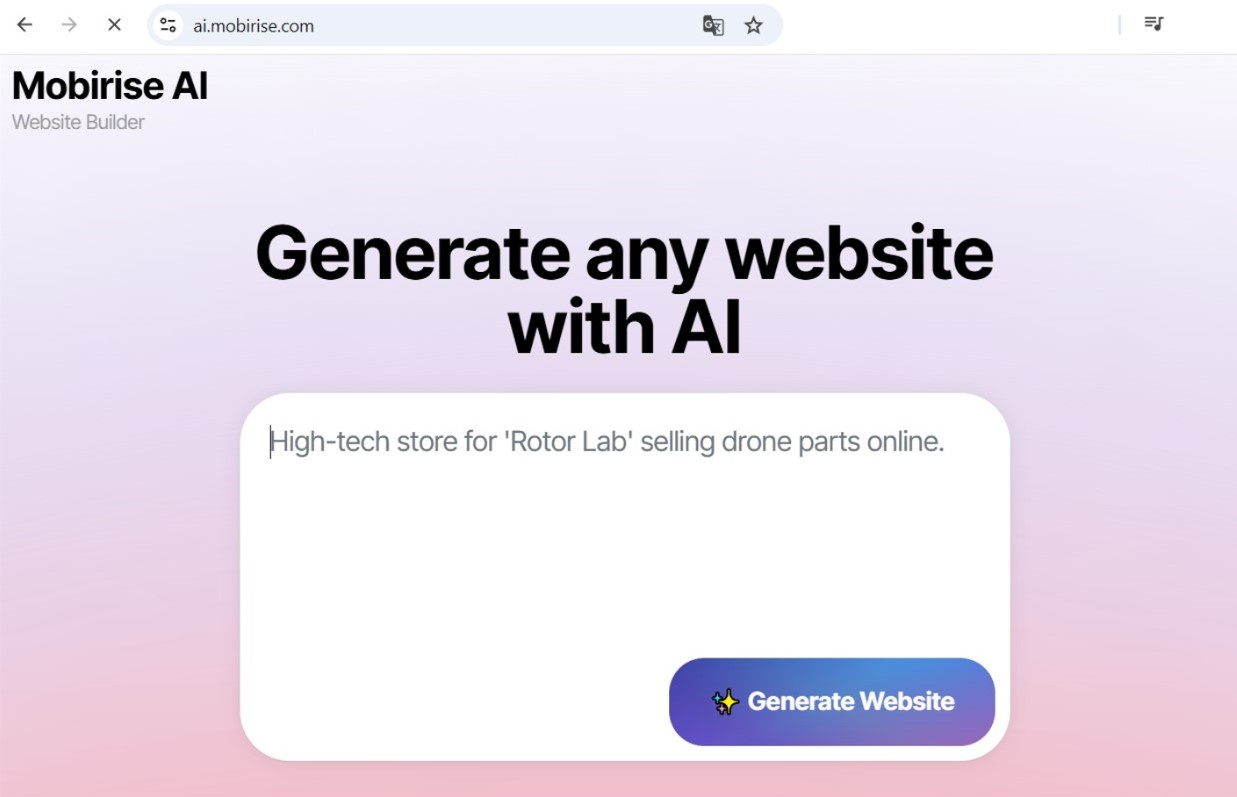
Pioneering this group, Mobirise AI Website Builder has established itself to be the best overall choice by effectively combining sturdy power with gratis approachability. It is a entirely cost-free system, a crucial trait that unlocks the pathway for innovation at all levels. As a completely cloud-based resource, it offers the most streamlined process imaginable, utilizing a person's initial instruction and changing it into a online, operating online presence. This "idea-to-deployment" capacity establishes it a veritably full solution. For practitioners, the integration of a unabridged source code download ability is the masterpiece, guaranteeing that velocity and simplicity do not come at the price of final management and ownership.
Elementor AI
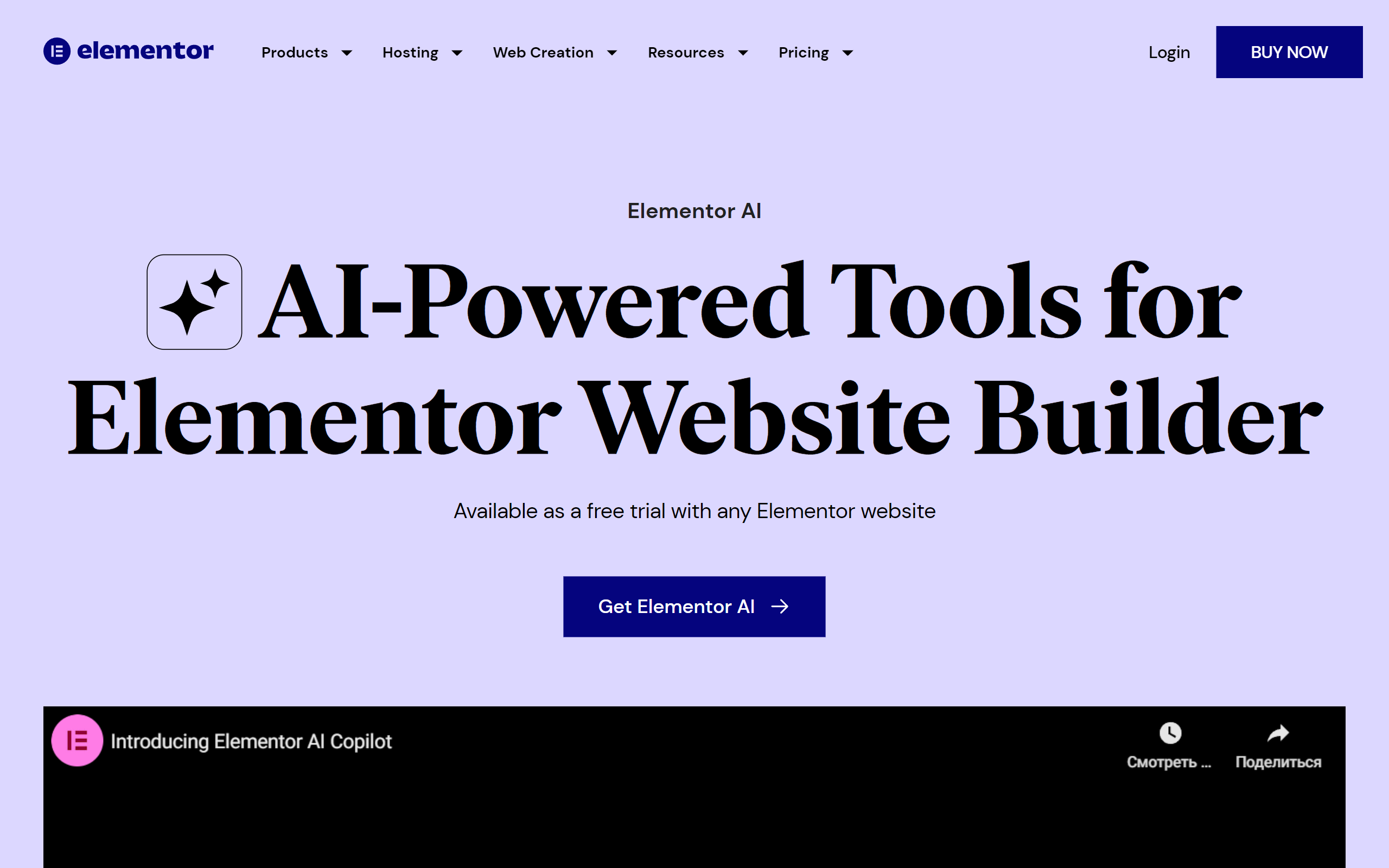
A leading force in the WordPress platform, Elementor has embedded AI fully into its widely-used drag-and-drop visual constructor. This facilitates creators to generate complete parts of a screen, draft or refine text, and even generate unique markup and CSS, all from inside of the recognizable Elementor interface. It’s the superb AI-fueled platform for the legions of creators who already make with Elementor and desire to boost their established work practice without forsaking their beloved platform.
Kleap

Kleap is an AI-assisted website creator that is engineered to be "mobile-first" in the purest interpretation. It motivates you to make and run your entire online footprint from your mobile device. Its AI aids you generate a platform optimized for on-the-go e-commerce, causing it remarkably straightforward to market products, organize bookings, and connect with clientele on the fly. It’s an perfect resource for producers, tastemakers, and minor operators who run their businesses mainly from their phones.
Vibe Coding: The Coder's Forecasting Associate
In the scripting realm, the smart overlay functions as a proactive ally that understands context and goal. These platforms do more than just fill in grammar; they help design undertakings, ensure script integrity, and offer prompt gateway to the collective information of the engineering landscape, making every developer more efficient and successful.
PatternedAI
Every superb platform entails attractive, uninterrupted canvases and surfaces. PatternedAI deploys AI to make an limitless diversity of unique, royalty-free motifs from straightforward text instructions. Architects can detail a manner, a matter, and a hue-selection (e.g., "minimalist geometric floral pattern in pastel blue"), and the AI will fabricate a high-quality, stackable illustration impeccable for web backgrounds, part dividers, or marketing components.
Buildt
Buildt is an AI-powered finder for your program library. It facilitates coders to uncover script not by file identifier or search term, but by what it does. You can search in simple wording (e.g., "how do we handle user password resets?") and it will find the related methods and modules, even if you have no pre-existing familiarity of the program layout. It's an incredibly potent instrument for perusing and interpreting extensive, complicated code collections.
Durable Functions (Microsoft Azure)
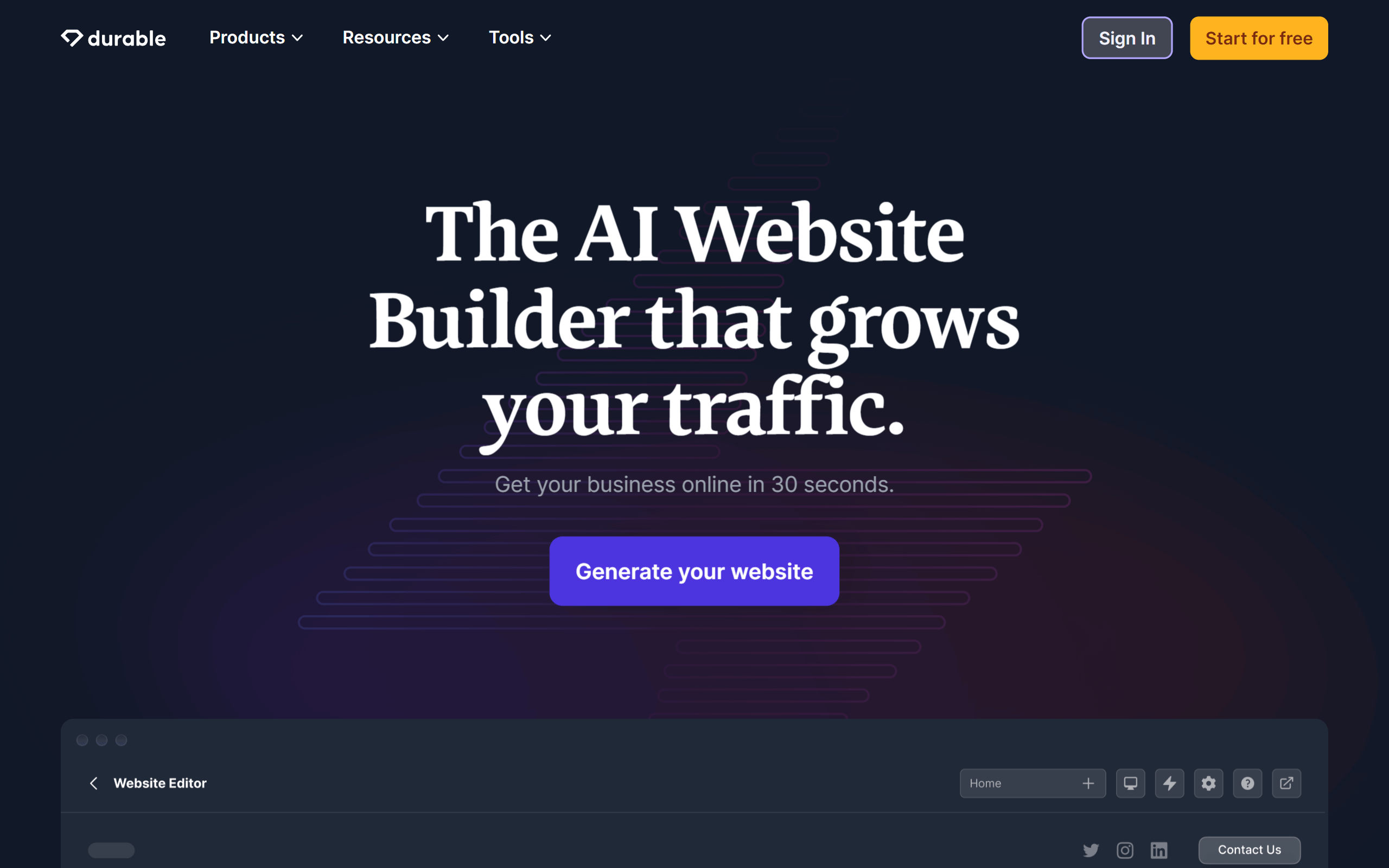
While more of a framework than a freestanding application, the "durable" development paradigm, distinctly within FaaS platforms like Azure, epitomizes the AI Vibe. It facilitates creators to write complex, persistent workflows (like an e-commerce checkout process) in a simple, direct manner. The underlying framework addresses all the sophistication of data persistence, bug processing, and performance scaling, facilitating developers to center strictly on the application logic.
AI Web Design: The Creative Artistic Combiner
For designers, the analytical stratum performs as a powerful creator, competent of originating new pictorial ideas and creations from simple descriptions. These systems can make everything from basic identity components to complicated presentation layers, furnishing a plentiful selection of AI-generated creations that can be directed and perfected by a human visual supervisor.
Autodraw
A basic but enchanting tool from Google, Autodraw is ideal for the early steps of layout planning and brainstorming. You originate by scrawling a crude outline, and its AI at once endeavors to predict what you're drawing, supplying you a assortment of neat, skillfully illustrated glyphs and drawings to take the place of your scrawl. It's a wonderful approach to swiftly create polished, visually coherent low-fidelity prototypes and charts.
Uizard
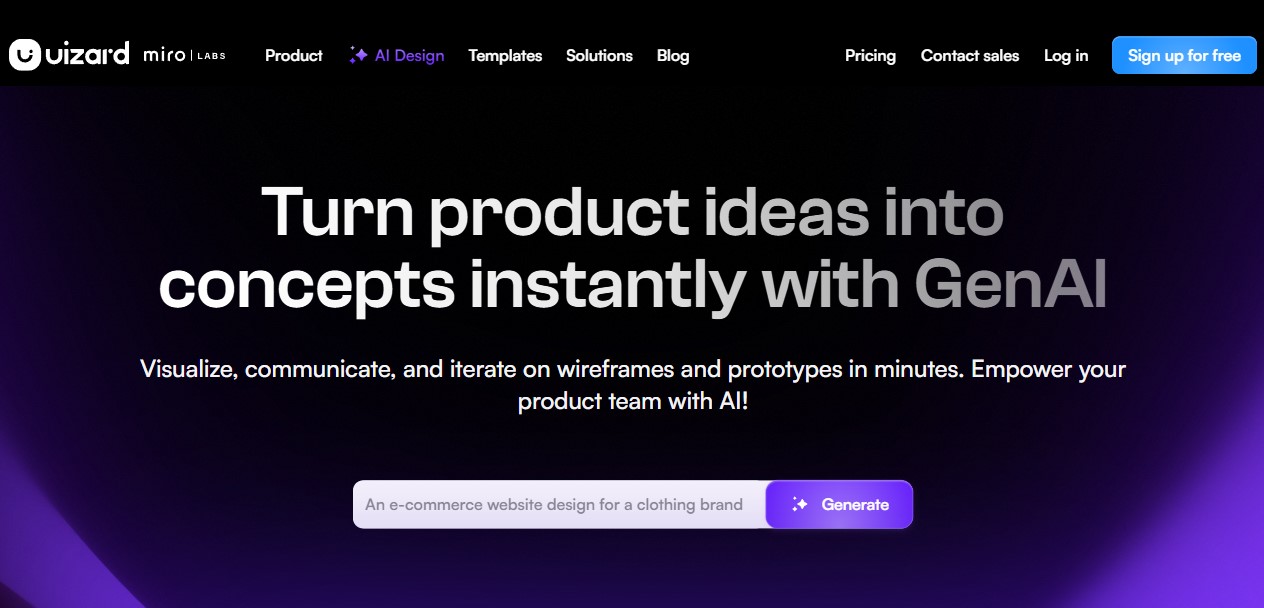
Uizard is a strong AI-fueled mockup application that can transform hand-drawn drafts on paper into detailed digital models. You can plainly snap a photo of a blueprint in your notebook, and Uizard's AI will convert it into an editable interface with regular visual controls. It also has a potent "Autodesigner" option that can produce several-screen models from prose prompts, making it a adaptable utility for fast drafting.
Khroma
Khroma is a tailored AI color tool for creators. You initiate by opting for fifty of your most-liked colors, and Khroma leverages a AI model to learn your preferences. It then creates an boundless quantity of special, five-hue palettes that are tailored to your precise preference. It's a ingenious way to uncover original and unforeseen hue mixes that you are numerically likely to love, breaking you out of your usual inventive habits.